

Quick Facts

170,000 sq. ft.
(254 units) of connected floor space.

Heating & Cooling
0.5 MW heating and 0.5 MW cooling capacity.

GeoExchange
as the renewable energy source.
Timeline
-
2009Project Start
-
2012Construction Complete
The Partnership
Centretown Citizens Ottawa Corporation (CCOC) is one of the largest private non-profit housing providers in Canada and recognized as a leader in the development and management of affordable housing.
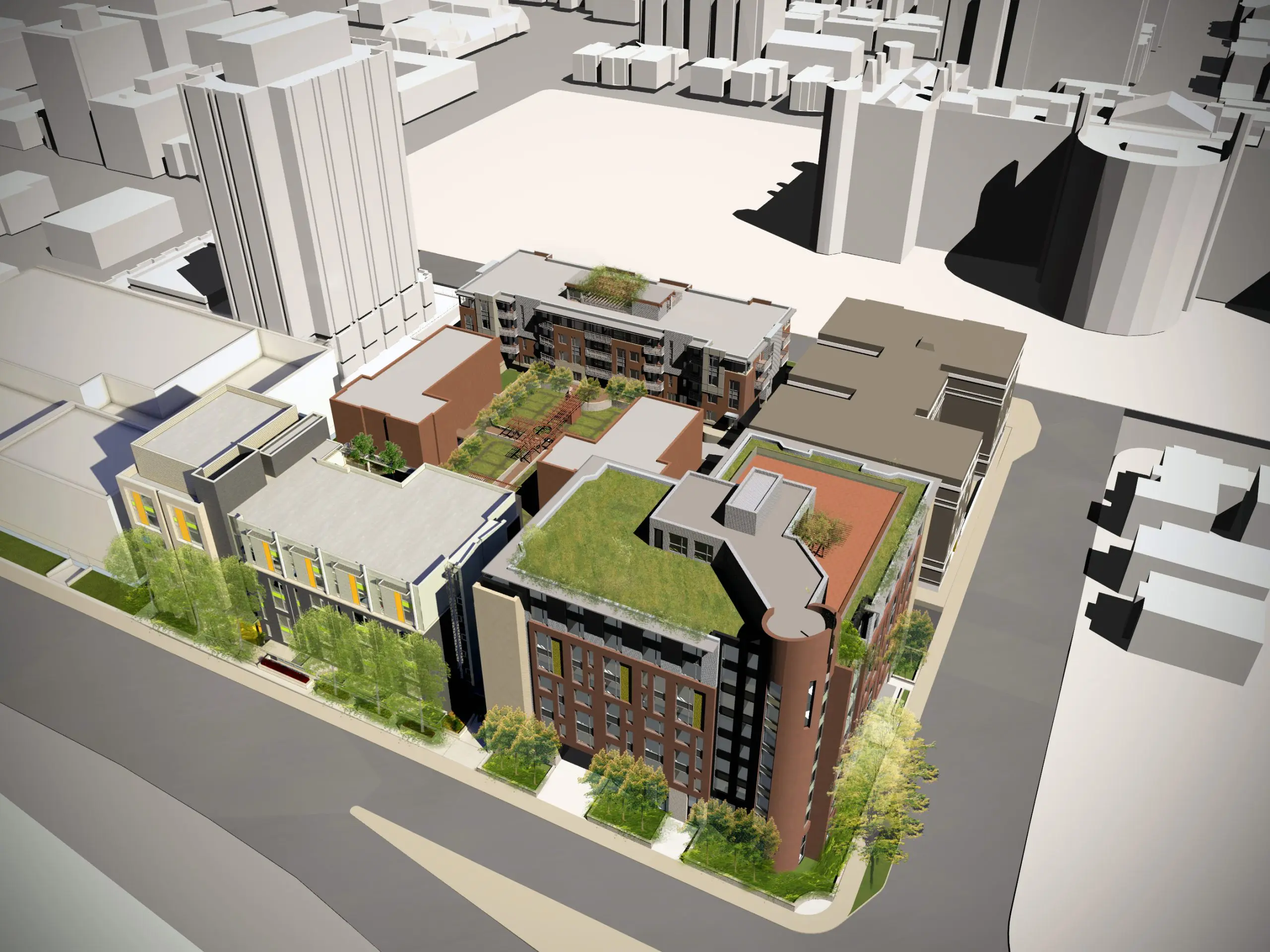
The Beaver Barracks Redevelopment project was seen as an opportunity to revitalize a previously vacant lot into a vibrant mixed-income housing community.
Corix and CCOC’s missions align with the betterment of communities. The Beaver Barracks Redevelopment project’s focus on social and environmental sustainability extended to the energy system design, reflecting a commitment to community well-being.
The Opportunity
The Beaver Barracks Redevelopment project provided the opportunity to incorporate a low-carbon energy solution for low and moderate-income people. This initiative presented the chance to showcase how high-performance buildings can meet internationally recognized building environmental sustainability standards while remaining accessible and affordable.
The Solution
In 2009, Corix developed and began operating a low-carbon GeoExchange district energy system to provide domestic hot water, heating and cooling to the community’s residents.
GeoExhange technology leverages the earth’s natural, renewable thermal energy. By acting as a heat sink, it provides heating in the winter and cooling in the summer. This innovative approach uses the underground geothermal field beneath the Beaver Barracks development, comprising 60 boreholes drilled vertically at depths of 450 feet each, totalling 27,000 feet.

The Energy System
The heart of the system resides in the Central Energy Plant, strategically located within an underground parking garage. Water-to-water Ground Source Heat Pumps extract and distribute heat exchange fluid through a district energy loop housed discreetly within the mechanical rooms of the parking facility.
During the winter, the heat stored in the ground is transferred through the vertical piping network to the Ground Source Heat Pumps. In the summer, the process is reversed, with the heat pump moving heat from buildings to the ground. Year-round comfort, minimal environmental impact.
Our Commitment to Reconciliation
Corix acknowledges that the Beaver Barracks’ utility lies on the unceded Traditional Territories of the Mohawk, Algonquin, and Anishinabewaki ᐊᓂᔑᓈᐯᐗᑭ Nations.
Learn more about our Indigenous Relations